
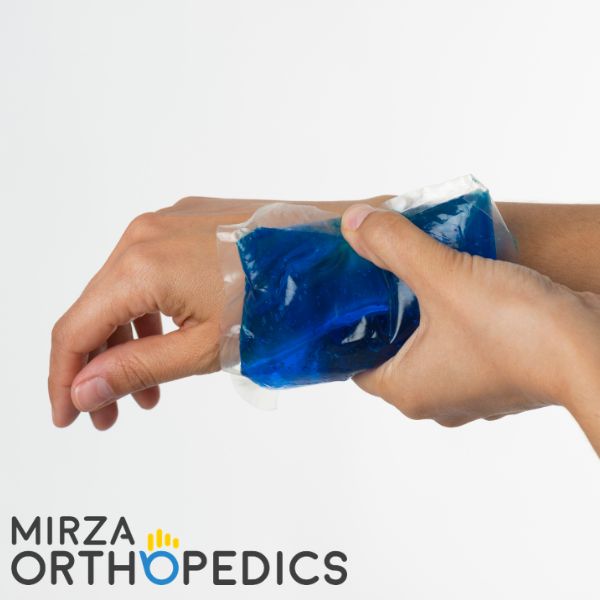
21 Jul Summer Wrist Fractures: When a Fall Needs More Than Ice
Summer on Long Island means more time outdoors, and more time outdoors means more chances to take a spill. Roller skating on the boardwalk, a misjudged step off a paddleboard, a tumble on the tennis court, or a simple trip on uneven pavement can all end the same way: with an outstretched hand hitting the ground and a wrist that suddenly does not feel right.
Most people reach for an ice pack and hope for the best. Sometimes that is enough. Often, though, a fall that seems minor has actually cracked or displaced one of the bones in the wrist, and ice alone will not fix it. Knowing the difference between a bad bruise and a genuine fracture can protect long-term hand function, and it can be the reason a wrist heals cleanly instead of stiffly.
Why Wrist Fractures Spike in the Summer
Warmer months bring a predictable rise in wrist injuries, and the reasons are straightforward. Activity levels climb, people try sports and hobbies they have not touched all winter, kids are outside constantly, and the natural reaction to any fall is to throw a hand out to break it. That instinct protects the head and face, but it channels the entire force of the fall directly into the wrist.
This mechanism even has a name in orthopedics: a FOOSH injury, short for “fall onto an outstretched hand.” It is one of the most common causes of wrist fractures across all age groups, from teenagers on skateboards to active adults and older patients whose bones may be more fragile.
The Most Common Summer Wrist Fractures
Not every wrist fracture looks or behaves the same way. A few show up again and again during the summer months.
Distal radius fracture. The radius is the larger of the two forearm bones, and the end nearest the wrist is the most frequently broken bone in the arm. A distal radius fracture can range from a hairline crack to a break where the bone shifts out of position, which changes how it needs to be treated.
Scaphoid fracture. The scaphoid is a small bone at the base of the thumb, and it is notorious for being easy to miss. A scaphoid fracture often feels like a sprain, causing pain in the soft hollow at the base of the thumb rather than an obvious deformity. Because this bone has a limited blood supply, an undiagnosed scaphoid fracture may fail to heal properly and therefore warrants prompt attention.
Growth plate fractures in children and teens. Younger patients have areas of developing bone that are weaker than the surrounding ligaments, which means a fall that would only sprain an adult can fracture a child’s growth plate. These injuries need careful evaluation to protect normal bone development.
When Ice Is Not Enough: Warning Signs of a Fracture
A little swelling and soreness after a fall is normal. Certain signs, though, point toward something more serious than a sprain and mean it is time to be seen by a professional rather than waiting it out. Watch for:
- Pain that stays sharp or worsens over the first day or two instead of easing
- Noticeable swelling, bruising, or tenderness directly over the wrist bones
- A visibly bent, crooked, or deformed wrist
- Difficulty gripping objects, rotating the forearm, or moving the wrist
- Numbness or tingling in the hand or fingers
- Tenderness at the base of the thumb, which can signal a scaphoid injury
If any of these are present, ice and rest are not the answer on their own. Imaging is the only reliable way to confirm whether a bone is broken, and some fractures, including scaphoid injuries, do not always appear on an initial X-ray. That is exactly why an in-person evaluation matters.
Why an Accurate Diagnosis Matters So Much
The temptation to “walk it off” is understandable, but wrist fractures that are ignored or treated incorrectly can lead to lasting problems: chronic pain, reduced range of motion, arthritis in the joint, and a permanent loss of grip strength. A bone that heals out of alignment may need to be re-broken and reset later, a far bigger undertaking than treating it correctly the first time.
The wrist is a compact, complex joint where several small bones, ligaments, and tendons work together to allow the precise movements that daily life depends on. Getting an expert assessment early gives the injury the best possible chance of healing while preserving full function.
How Wrist Fractures Are Treated
Treatment depends entirely on the type of fracture and how far the bone has moved out of place. A stable, non-displaced fracture may heal well with a cast or splint and a period of monitored rest. A displaced or unstable fracture, on the other hand, often requires realignment and, in some cases, surgery to hold it in place with pins, plates, or screws while it heals.
Mirza Orthopedics specializes in hand, wrist, elbow, shoulder, and knee conditions and uses advanced techniques, including minimally invasive and arthroscopic approaches, to repair wrist injuries while protecting the surrounding tissue. The goal is always the same: restore strength and mobility so patients can get back to the activities they love. More information on wrist care is available on the practice’s wrist injuries page.
When to See an Orthopedic Surgeon in Hauppauge, NY
Anyone in the Hauppauge area who has taken a hard fall this summer and is dealing with persistent wrist pain, swelling, or limited movement should not simply wait for it to resolve. Seeing an orthopedic surgeon in Hauppauge, NY, promptly means the injury can be imaged, accurately diagnosed, and treated before minor damage becomes a lasting problem.
An experienced orthopedic surgeon in Hauppauge, NY, can determine whether a wrist injury is a straightforward sprain or a fracture that requires a cast, realignment, or surgical repair, and can develop a recovery plan tailored to each patient’s activity level and goals. That expertise is especially important for injuries like scaphoid fractures that are notoriously easy to overlook.
Led by fellowship-trained hand and upper-extremity specialist Dr. Justin Mirza, the team at Mirza Orthopedics offers focused upper-extremity care that makes a real difference in treating wrist injuries. Conveniently located in Smithtown, just minutes from Hauppauge, the practice provides the trusted care patients across Long Island turn to when a fall needs more than ice.
Do Not Let a Summer Fall Sideline You
A wrist fracture, if caught and treated early, is a temporary setback. The same fracture ignored can become a chronic issue that lingers for years. If a summer fall has left a wrist swollen, painful, or hard to move, expert evaluation is the smartest next step.
Schedule an appointment with Mirza Orthopedics today and get back to enjoying summer with confidence.


