
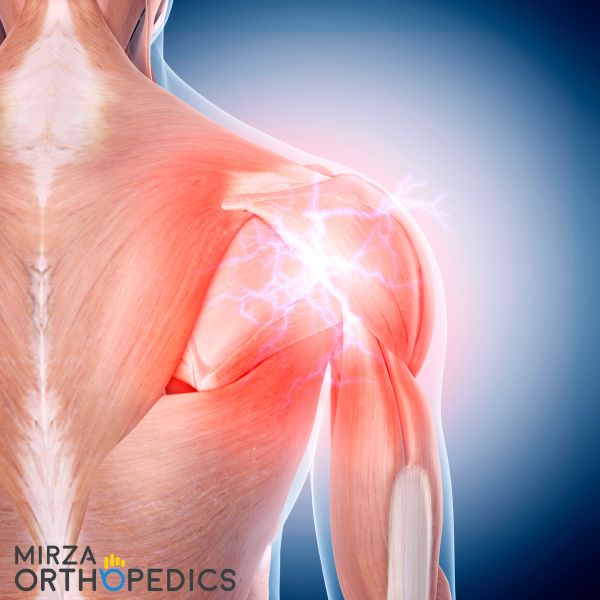
04 Aug Total Shoulder Arthroplasty: What to Expect Before, During, and After Surgery
If a surgeon has told you it may be time to consider a shoulder replacement, you probably walked out of that appointment with unfamiliar terminology and a long list of questions. Total shoulder arthroplasty is among the most dependable joint replacement surgeries in orthopedics for relieving arthritic shoulder pain — but it’s a significant operation, and recovery is measured in months rather than weeks.
This guide explains what shoulder replacement surgeries actually involve, how the different types differ, and what shoulder replacement surgery and recovery realistically look like from the day of surgery through the following year. Recovery varies from patient to patient, and the protocol recommended by your surgeon always takes priority over anything you read online. But you should finish this page understanding the decision in front of you.
Total Shoulder Arthroplasty at a Glance
|
What it is
|
Damaged surfaces of the shoulder joint are replaced with a prosthetic made of metal and plastic |
|
Most common reason
|
Advanced shoulder arthritis that no longer responds to nonsurgical care |
|
Main types
|
Anatomic total shoulder replacement, reverse shoulder replacement, and partial shoulder replacement |
|
Anesthesia
|
Usually general anesthesia plus a nerve block that numbs your shoulder |
|
How long surgery takes
|
Surgery usually takes about one to two hours |
|
Hospital stay
|
Many people go home the same day; some stay in the hospital one to two days |
|
Sling
|
Commonly worn for four to six weeks, sometimes on the arm for 6 weeks |
|
Physical therapy
|
Often begins one to two weeks after surgery; rehabilitation typically continues three to six months |
|
Back to daily activities
|
Around four to six months for most patients |
|
Full range of motion and strength
|
Frequently nine to twelve months |
What Shoulder Replacement Surgery Involves
Your shoulder is a ball and socket joint. The top of the upper arm bone is shaped like a ball, and it sits against a shallow socket called the glenoid, which is part of the scapula — your shoulder blade. Smooth cartilage covers both surfaces so the joint glides freely through a wide range of motion.
Arthritis wears that cartilage away. Bone begins moving against bone, producing the deep ache, grinding, stiffness and other symptoms that bring people to a shoulder specialist. Cartilage doesn’t grow back, which is why arthritis is managed rather than cured — and why joint replacement eventually becomes the option that addresses the underlying problem rather than masking it.
Shoulder replacement surgery replaces the damaged surfaces of the shoulder joint with implants made of metal and plastic. In a total shoulder arthroplasty, the worn ball at the top of the upper arm is removed and replaced with a metal ball on a stem seated inside the upper arm bone, and the socket is resurfaced with a smooth plastic component. Instead of raw bone grinding against raw bone, two artificial surfaces glide against each other. That’s where the pain relief comes from.
Types of Shoulder Replacements
Not all shoulder replacement surgeries are the same. Understanding the difference between reverse and anatomic total shoulder replacement is the single most useful thing you can take into your consultation.
Anatomic Total Shoulder Replacement
An anatomic total shoulder arthroplasty recreates your normal anatomy — a ball where the ball belongs, a socket where the socket belongs. It’s the traditional approach, and it works well when the primary problem is worn-out cartilage.
The essential requirement is a functioning rotator cuff. The rotator cuff is the group of four muscles and tendons that keep the ball centered in the socket and power overhead motion. An anatomic shoulder replacement depends on that cuff to work properly. If the cuff is badly torn or non-functional, this type of implant tends to fail — the ball migrates upward, and the components loosen or become painful.
One detail explains a great deal about recovery. To reach the shoulder joint, the surgeon generally has to release and then repair the subscapularis, one of the rotator cuff tendons at the front of the shoulder. That repair has to heal. It’s the reason early rehabilitation focuses on having someone else move your shoulder rather than moving it under your own power.
Reverse Total Shoulder Replacement
A reverse shoulder replacement inverts the geometry: the ball is attached to the shoulder blade and the socket to the top of the upper arm. That sounds counterintuitive, but it solves a specific mechanical problem. By shifting the joint’s center of rotation, reverse shoulder arthroplasty allows the deltoid — the large muscle over the outside of the shoulder — to lift the arm without help from the rotator cuff.
Shoulder surgeons typically recommend a reverse total shoulder replacement when:
- Rotator cuff tears are too large or too old to repair, especially alongside arthritis
- A previous rotator cuff repair or shoulder replacement has failed
- There’s a complex fracture at the top of the upper arm bone
- The socket is severely worn or deformed
Recovery differs somewhat too. Because there’s no cuff repair to protect, many surgeons permit patients to actively move their shoulder earlier after a reverse shoulder replacement, though the overall timeline to full shoulder function is broadly similar.
Partial Shoulder Replacement
In a partial shoulder replacement — also called hemiarthroplasty — only the ball at the top of the upper arm is replaced with a prosthetic, and the natural socket is left alone. This is sometimes appropriate for certain fractures, for younger patients, or when the glenoid bone isn’t suitable for an implant.
No single option is best. Reverse and anatomic total shoulder replacements address different problems, and your imaging and physical examination determine which one applies to you. Ask your doctor specifically which type they’re recommending and why — the answer tells you a lot about what your recovery will look like.
When Surgeons Recommend Shoulder Replacement Surgery
Joint replacement isn’t a first step. Surgeons recommend shoulder replacement surgery when the treatments that come before it have stopped working.
Most patients reach this point after some combination of activity modification, anti-inflammatory medication, physical therapy, and cortisone injections. Common shoulder conditions that lead here include osteoarthritis, rheumatoid arthritis, rotator cuff tear arthropathy, avascular necrosis, and the aftermath of a severe fracture.
The signals that nonsurgical care has run its course tend to be consistent:
Shoulder pain that wakes you up. Night pain is often the deciding factor. Arthritic shoulders hurt when you lie on them, and losing sleep month after month wears people down more than daytime discomfort does.
Lost mobility in your shoulder. Not being able to reach a cabinet, fasten a seatbelt, or put on a jacket without pain.
Injections that no longer help. When relief lasts weeks instead of months, or stops entirely.
Imaging that confirms it. X-rays showing bone-on-bone joint space loss, often with bone spurs.
Daily activities you’ve quietly given up. If you’ve stopped golfing, swimming, or gardening without really deciding to, say so out loud in the exam room.
One thing worth knowing: waiting indefinitely isn’t neutral. Severe arthritis can erode the socket bone over time, and significant bone loss makes reconstruction more complicated. There’s a window in which the operation is more straightforward, and that’s part of what your surgeon is weighing.
Before surgery
Getting Ready for Surgery
Expect a thorough evaluation. Beyond examination and X-rays, your surgeon will likely order a CT scan to assess the socket in three dimensions and possibly an MRI to evaluate the rotator cuff. Those two questions — how much bone is present, and does the cuff function — determine which implant you receive. Many shoulder surgeons now use CT-based planning software to size and position components before entering the operating room.
You’ll also need medical clearance confirming you’re ready for surgery and safe for anesthesia, and possibly dental clearance, since untreated infection elsewhere in the body can travel to a new implant.
What You Can Do to Improve Your Outcome
Patients who prepare do measurably better, and much of this is within your control.
Stop smoking. Nicotine impairs bone and soft tissue healing and raises infection and complication risk.
Work on the shoulder beforehand. Gentle motion and strengthening of what still functions gives you a better starting point. Patients who go into shoulder surgery stiff tend to come out stiff.
Address what’s manageable. Blood sugar control, weight, and alcohol intake all affect healing.
Tell your surgical team everything. Let your surgeon know about all medications and supplements you take, prior shoulder surgery, any recent infections, and any history of problems with anesthesia.
Preparing for Life With One Arm
For several weeks you’ll effectively have one working arm. If it’s your dominant side, that’s a real adjustment.
Worth arranging in advance:
- Rides to appointments — you won’t drive in a sling or while taking narcotic pain medication
- Everything you use daily moved to waist height, since reaching overhead and behind your back will be off-limits
- Front-button or zip-front shirts instead of pullovers
- Meals prepped and frozen, or help with cooking
- A recliner or wedge pillow — most patients can’t sleep flat comfortably early on
- A shower chair, handheld shower head, and long-handled shoe horn
- Someone to stay with you the first few days
The Day of Surgery
Total shoulder arthroplasty is increasingly performed at an ambulatory surgery center, and many people go home on the day of the procedure. Whether that’s right for you depends on your overall health and your support at home. Some patients stay in the hospital one to two days.
Most patients receive general anesthesia combined with a regional nerve block that numbs your shoulder and arm. The block often provides significant pain relief for the first 24 to 72 hours, covering the most uncomfortable stretch.
Surgery usually takes about one to two hours. The surgeon accesses the shoulder joint, removes the damaged surfaces, prepares the bone, and places the implant. You’ll wake up in the recovery room with your arm in a sling.
One thing that catches people off guard: when the nerve block wears off, pain can increase noticeably. That’s expected and not a sign that something went wrong. Begin your prescribed medication before the block fully wears off rather than waiting until you’re uncomfortable — staying ahead of pain works far better than chasing it. Right after surgery, you’ll receive instructions on caring for the surgery site, and you should let your surgeon know promptly about fever, spreading redness, drainage, or worsening pain.
Shoulder Replacement Surgery and Recovery, Phase by Phase
Recovery is a progression, and each phase exists for a reason. Advancing faster than your protocol allows is one of the more common causes of a disappointing result.
The ranges below are typical. Recovery varies from patient to patient; every patient is different, and the exercise program recommended by your surgeon and physical therapist takes precedence.
Weeks 0–2: Protect the Repair
Your arm stays in the sling essentially full time, removed only for hygiene and prescribed exercises. The goal is protecting the healing tissue — the subscapularis repair in an anatomic shoulder replacement, and the bone-implant interface in every type.
You’ll likely begin gentle movement within the first days: pendulum swings, plus bending the elbow and moving the wrist and fingers to maintain circulation and keep the shoulder and elbow from stiffening. Formal physical therapy commonly starts one to two weeks after surgery.
Expect swelling and bruising that can travel toward the hand and even across the chest wall. Ice helps. So does frequently making a fist and bending your elbow.
Most patients find this the hardest stretch — not because pain is unbearable, but because sleep is disrupted and you’re suddenly dependent on other people.
Weeks 2–6: Restore Motion
Rehabilitation focuses on passive range of motion, meaning your physical therapist or your other arm moves the shoulder while the surrounding muscles stay quiet. After an anatomic total shoulder replacement, reaching behind your back and rotating outward are usually restricted during this window to protect the tendon repair.
Lifting limits are stricter than most people expect — often nothing heavier than a coffee cup. Many patients begin tapering sling use at home toward the end of this period with surgeon approval, though some wear it on the arm for 6 weeks.
After a reverse shoulder replacement, some surgeons allow active motion earlier, since there’s no cuff repair to safeguard.
Weeks 6–12: Start Using the Shoulder
The sling comes off. Therapy shifts toward active motion — your own muscles doing the work — and then early strengthening, generally beginning around the three-month mark.
Most patients are cleared to drive somewhere in the four-to-eight-week range, once out of the sling, off narcotic medication, and able to control a vehicle safely. Whether you’re able to go back to work depends on the work: desk jobs are often possible within a few weeks, while physical labor takes considerably longer. Ask your doctor before you go back to work.
This is usually where pain relief becomes unmistakable. Many patients notice they’re sleeping through the night for the first time in years.
Months 3–6: Build Strength
Progressive strengthening with expanding functional use. Most patients resume the majority of daily activities in this window and gradually increase their activity level under guidance.
Months 6–12: Full Recovery
Range of motion and strength continue improving for up to a year, sometimes longer. Motion usually plateaus before strength does. Many patients describe steady, gradual improvement well past six months after surgery.
Throughout all of this, you need to do the exercises. Rehabilitation is not something done to you at appointments — the home program between sessions is what determines your final range of motion and strength.
Risks and Complications
Shoulder replacement surgeries are reliable, but they are still surgery. Complications are uncommon and worth understanding before you consent:
- Infection, which may require another surgery
- Nerve or blood vessel injury during the procedure
- Fracture of the upper arm bone or socket
- Implant loosening or wear over time — loosening of the socket component is the most frequently reported reason for revision after anatomic total shoulder arthroplasty
- Instability or dislocation of the components
- Persistent stiffness, more likely when rehabilitation is inconsistent
- Rotator cuff failure following an anatomic shoulder replacement
- Blood clots and standard anesthesia risks
Your surgeon will discuss which of these are more or less likely given your anatomy, health, and implant type.
Getting Back to What You Actually Want to Do
For most patients, the real question isn’t when they can lift a gallon of milk. It’s whether they’ll golf again.
Low-impact activity is generally encouraged once you’re cleared. Swimming, walking, cycling, golf, and doubles tennis are commonly resumed by many patients, often somewhere in the four-to-six-month range with surgeon clearance. Pickleball — increasingly popular among exactly the age group having these procedures — falls into a similar category, though the overhead serve and quick reactive movement warrant a conversation about timing and technique.
Activities that generate high impact or heavy overhead load carry more risk to an implant: heavy weightlifting, contact sports, and repetitive overhead work. Most surgeons advise permanent limits on overhead lifting.
Clearance is individual. It depends on the type of shoulder replacement you had, how rehabilitation progressed, and what the activity demands. Talk with your doctor about the specific sports you care about — and raise it early, because it may influence which procedure makes sense for you.
Talk With a Shoulder Specialist on Long Island
If shoulder arthritis is limiting what you can do, or you’ve been told you may need one of these joint replacement surgeries and want a clear explanation of your options, a thorough evaluation is the right next step. Determining whether an anatomic, reverse, or partial shoulder replacement fits your anatomy — and whether you’ve actually reached the point where surgery makes sense — starts with an examination and proper imaging.
At Mirza Orthopedics, our specialists treat the full range of shoulder conditions, from rotator cuff tears and instability through advanced arthritis, using nonsurgical, minimally invasive, and surgical approaches. Request an appointment to see if shoulder replacement surgery is right for you.
Frequently Asked Questions
What is total shoulder arthroplasty?
Total shoulder arthroplasty is the medical term for shoulder replacement surgery. The damaged ball at the top of the upper arm and the socket on the shoulder blade are replaced with a prosthetic made of metal and plastic, eliminating the bone-on-bone contact that causes arthritic shoulder pain.
How painful is shoulder replacement surgery?
The first one to two weeks are typically most uncomfortable. A nerve block that numbs your shoulder usually covers the first 24 to 72 hours, and most patients transition off stronger medication within a couple of weeks.
How long will I wear a sling?
Commonly four to six weeks, depending on the type of replacement and your surgeon’s protocol. Some patients wear it on the arm for 6 weeks. Anatomic shoulder replacements generally require longer sling use to protect the tendon repair.
Will I go home the same day or stay in the hospital?
Many shoulder replacement surgeries are now outpatient procedures, and people go home on the day of surgery. Others stay in the hospital one to two days. It depends on your health and your support at home.
What's the difference between reverse and anatomic total shoulder replacement?
An anatomic total shoulder replacement recreates normal anatomy and requires a functioning rotator cuff. A reverse shoulder replacement swaps the ball and socket positions so the deltoid can lift the arm without the rotator cuff, making it an option when cuff tears can’t be repaired.
What is a partial shoulder replacement?
In a partial shoulder replacement, only the ball at the top of the upper arm is replaced with a prosthetic and the natural socket is left intact. It’s used in select cases, including certain fractures.
When can I drive after shoulder surgery?
Generally once you’re out of the sling, off narcotic pain medication, and able to control the vehicle safely — often four to eight weeks after surgery. Your surgeon makes that determination.
How long does recovery take?
Most patients resume the majority of daily activities around four to six months after surgery, with range of motion and strength continuing to improve for nine to twelve months. Physical therapy typically runs three to six months, both in the hospital and at home.
Will I be able to play golf or tennis again?
Many patients return to golf and doubles tennis, commonly around four to six months with clearance. High-impact activity and heavy overhead lifting are generally discouraged long term. Ask your doctor about your specific sports.
Am I too young for a shoulder replacement?
Age alone doesn’t disqualify you, but younger and more active patients have higher reported revision rates over time. The conversation involves weighing years of pain relief now against the possibility of another surgery in the future.
How long does a shoulder implant last?
Published studies report roughly 95% or better implant survival at ten years for anatomic total shoulder replacement and about 90% for reverse shoulder replacement. Survivorship is lower in patients under 65.


